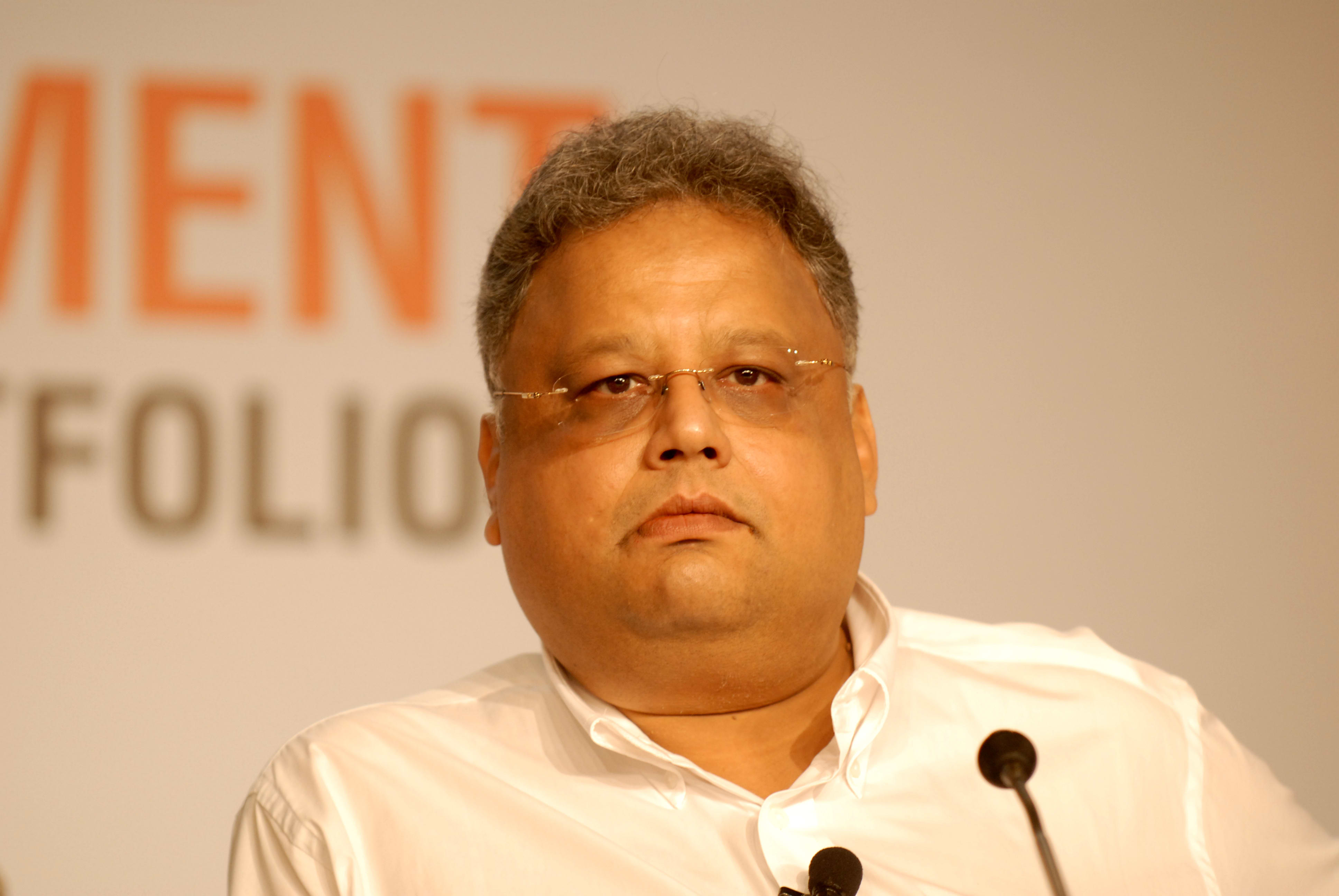
Billionaire investor Rakesh Jhunjhunwala, CEO, Rare Enterprises.
Hemant Mishra | Mint | Hindustan Times | Getty Images
Indian billionaire investor Rakesh Jhunjhunwala said he is very bullish about the country's medium-to-long term growth prospects.
In an interview this week with CNBC's Tanvir Gill, Jhunjhunwala, who is commonly referred to as the "Warren Buffett of India" said things have begun to improve in the economy following five years of a banking crisis, subpar capital expenditure and the introduction of important reforms such as the country's Goods and Services Tax and demonetization.
"We are now having improvement in credit culture, we are having integrity come to the fore," he said, adding that the government has taken steps to improve the ease of doing business in the country. "The China-America spat on trade is (also) a great opportunity for India. I don't see any reason why growth in India will not come back with a bang."
The investor said he sees India's growth reach around 8%-9% in the near future and them jump into double-digit figures in the longer term.
"We've raised our rate of growth in every decade since independence," he said. "I think India's sitting on what is going to be the highest level of growth it has ever seen from 2020 to 2030."
Still, reports have said that economists and investors are increasingly skeptical of India's official growth numbers, questioning if the statistics put out by the government paint an accurate picture.
Reuters reported that a study conducted by a division of India's statistics ministry in the 12 months ending June 2017 found that as much as 36% of the companies in the database used in the country's GDP calculations could not be traced or were wrongly classified.
Former Reserve Bank of India governor, Raghuram Rajan, also expressed doubts over India's growth number. He was reported to have said that it was unlikely India grew at 7% when not enough jobs were being created, according to local media. He said India should consider appointing an impartial body to look at the data.
Jhunjhunwala, for his part, downplayed the concerns about the numbers.
"Just because you don't agree with your figures, you're suspicious of them, you can't say the method of calculation is incorrect," he said. "If they were incorrect, Mr. Raghuram Rajan should've corrected them. When he was the RBI governor, what was he doing?"
He added that he was also bullish about India's future because of the diminishing presence of Indian crony capitalism — which refers to the mutually advantageous relationship between government officials and businesses.
Prime Minister Narendra Modi's government was said to have taken a strong stance against corrupt businessmen in some of India's top companies, particularly as India underwent its banking crisis and revamped its bankruptcy laws.
"The journey to limit crony capitalism: It's a journey, it's not a destination," Jhunjhunwala said. "Slowly but surely, in India, crony capitalism has died and governance is what brings about real growth."

No comments:
Post a Comment